A follow-up email goes out to your guests a while after they have been in, and asks one question: how was your visit? They tap one of five stars, and the ones who had a great time are invited to say so publicly — on Google, on Tripadvisor, or both. It is switched off until you turn it on, and once it is on it looks after itself.
It is the least effortful review-gathering there is. You are asking people who have just eaten with you, by name, while the evening is still fresh.
How it works
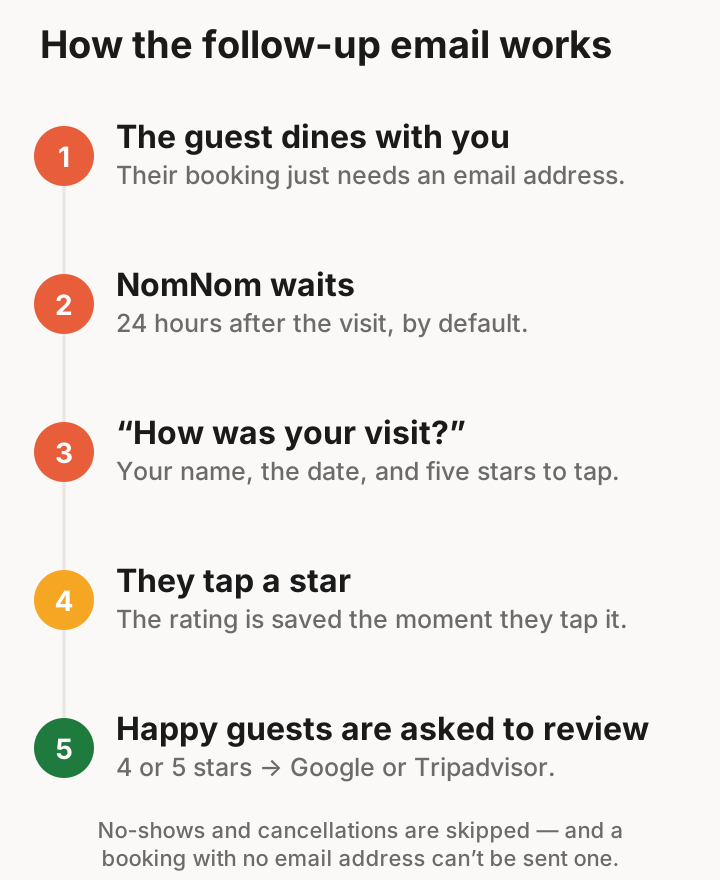
NomNom looks for bookings that are due a follow-up every quarter of an hour, so an email lands within about fifteen minutes of its due time rather than on the dot. Nothing is sent twice: each booking gets one follow-up, ever.
The follow-up is not copied to your own inbox — it is a note between you and your guest, and you would not thank us for a copy of every one.
Switch it on
Everything to do with the follow-up sits on a single tab, and the switch at the top of it is the only thing you have to change to get started.
In NomNom Web: open the account menu (top-right) → Settings → Email Settings → the Follow-up tab.
On the mobile app: the same tab lives under Settings → Email Settings.
Turn on Send follow-up email. If you have not added a review link yet, NomNom offers you a shortcut to add your Google one there and then — take it or skip it, the follow-up is on either way.
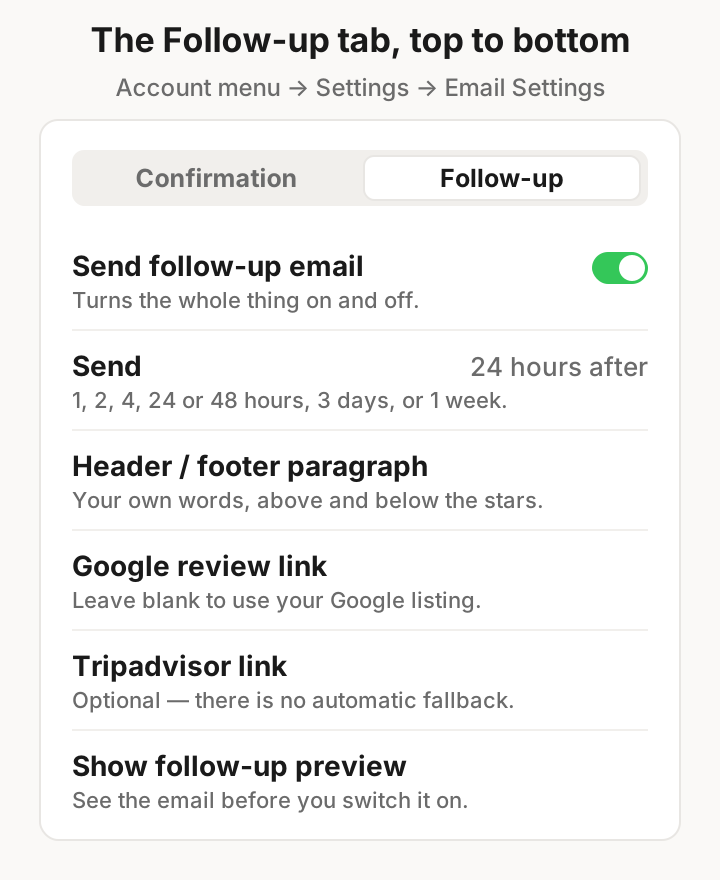
[Web screenshot: the Follow-up tab of Email Settings, with the switch on and a review link filled in]
Choose when it goes out
Send offers a short list of delays: 1, 2 or 4 hours, 24 or 48 hours, 3 days, or 1 week. The clock runs from the booking’s own time.
24 hours is the default and suits most restaurants — the guest is home, the meal is still vivid, and you are not interrupting the evening you are asking about. A few hours works nicely for a lunch trade; a week is usually too long to expect much detail.
Switching the follow-up on does not email your whole history. NomNom catches up on bookings from roughly the last three days and no further back, so you can turn it on mid-service without a few hundred past diners hearing from you at once. The same applies if you shorten the delay later.
Add your review links
This is the part that turns a thank-you into a review.
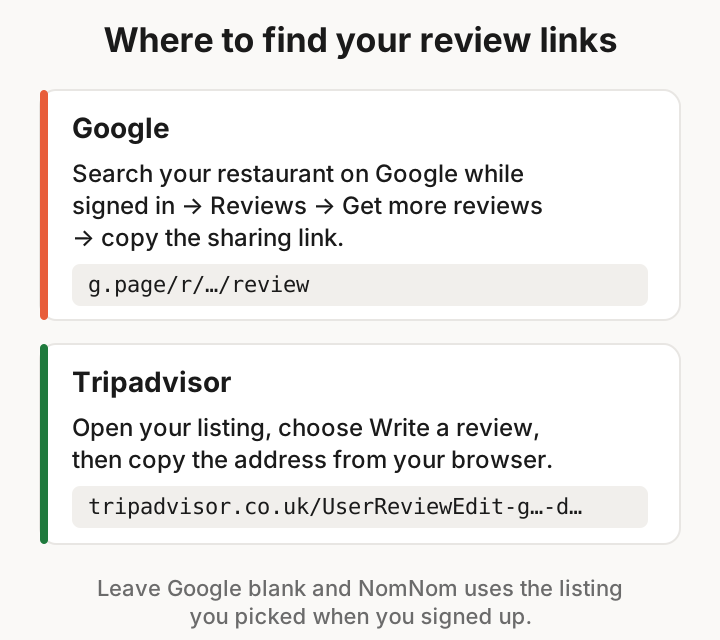
Google review link. You can leave this blank. If you picked your restaurant from Google when you first set NomNom up, we already know your listing and build the review link for you. Fill it in if you would rather point somewhere specific, or if your listing has moved.
Tripadvisor link. Paste the address of your listing’s review page. There is no automatic version of this one, so no link means no Tripadvisor button.
Add both and guests see both. Add neither and follow-ups still go out — guests can still rate you and still send you a private note — but nobody is asked for a public review, which rather wastes the email.
What your guest sees
Tapping a star in the email opens your own review page with that rating already chosen, so a guest who taps five stars in their inbox arrives with the review buttons waiting.
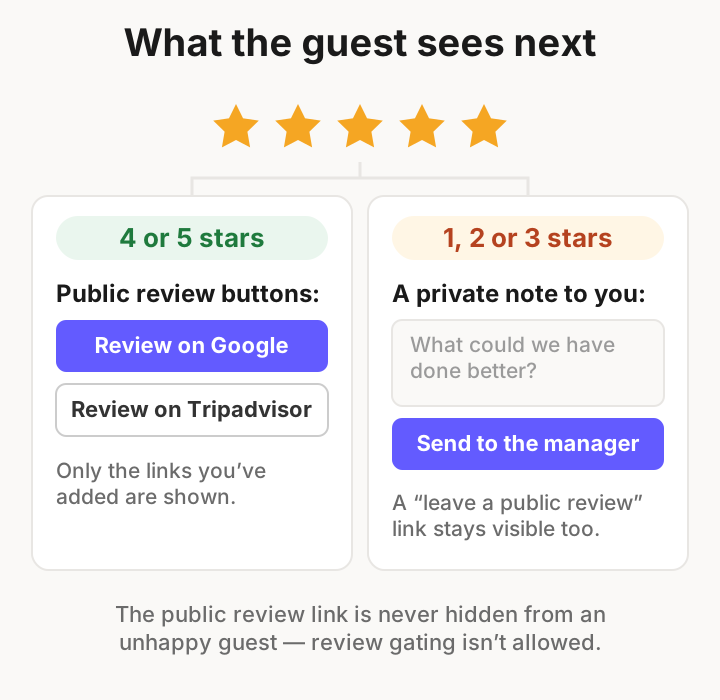
Four or five stars: a warm thank-you and your review buttons — Google, Tripadvisor, or both, depending on what you have added.
Three stars or fewer: an apology and a message box, so the guest can tell you what let them down privately instead of posting it. The public review link stays on the page as a quieter option.
The rating is saved the moment it is tapped, before they type anything, so a guest who taps and wanders off still counts.
There is no review inbox in NomNom yet — ratings and private messages are stored with the booking rather than shown on a screen you can browse. If a place to read them would be useful to you, do tell us; it is the obvious next step.
Put it in your own words
The email carries your header image, your restaurant name and the visit date, and you can add a paragraph of your own above the stars and another below them. Use them for the things only you would say — the name of the chef, a nod to the occasion, an invitation to book again.
In NomNom Web: the Header paragraph and Footer paragraph fields are on the same Follow-up tab, just under the timing.
Show follow-up preview, at the bottom of the tab, renders the whole email with sample details so you can read it as your guest will before you switch anything on.
Send one by hand
You do not have to wait for the timer. Open the booking, find its Messages section, choose Send email and pick Post-visit follow-up — it sits alongside the option to re-send the confirmation. (The mobile app calls it Follow-up email.)
The option only appears when the booking makes sense for one: its time has passed, it has an email address, and it has not had a follow-up already. It is handy for a party you particularly want to hear from, or for a booking that was still in the diary when you first turned follow-ups on.
Who gets a follow-up
- Bookings with an email address — a phone booking taken without one cannot be sent anything.
- Guests who actually came — cancelled bookings are skipped, and so is anything you have marked as a no-show, so nobody gets asked how a meal was that they never had.
- One email per booking — there is no chasing, and no second ask.
- Bookings from the last few days — the catch-up window is about three days beyond your chosen delay.
Keeping it fair
You may have seen review-gathering tools that quietly send happy guests to Google and unhappy ones to a private form. That is called review gating, and it is against Google’s policies and UK and US consumer law.
NomNom does not do it. A guest who rates you one star is shown your public review link too — less prominently than the private message box, but never hidden. What the follow-up gives you is not a filter; it is timing, and a polite ask, at the moment your guests are most inclined to say something kind.